MDM management and package assignment concept
Client: Matrix42
Duration: 2,5 months
Challenge:
The initial phase of the platform consolidation was faced with the strategic challenge of building a resilient bridge between two technologically opposing worlds: a mature on-premise structure and a modern cloud architecture. At this early stage, the complexity of functional requirements for global device management was so high that a purely visual approach would have fallen short. The actual hurdle lay in harmonizing the abstract technical limitations of legacy systems with the high-efficiency expectations of modern enterprise users, while simultaneously strengthening trust in a cloud transformation. It was essential to define a logical basic structure that ensured scalability for international clients and validly mapped the specific workflows for software deployments and MDM (Mobile Device Management) processes. Without this fundamental clarification of the architecture, there was a risk of misguided developments that would have jeopardized both the technical feasibility and the economic viability of the entire merger project.
Solution:
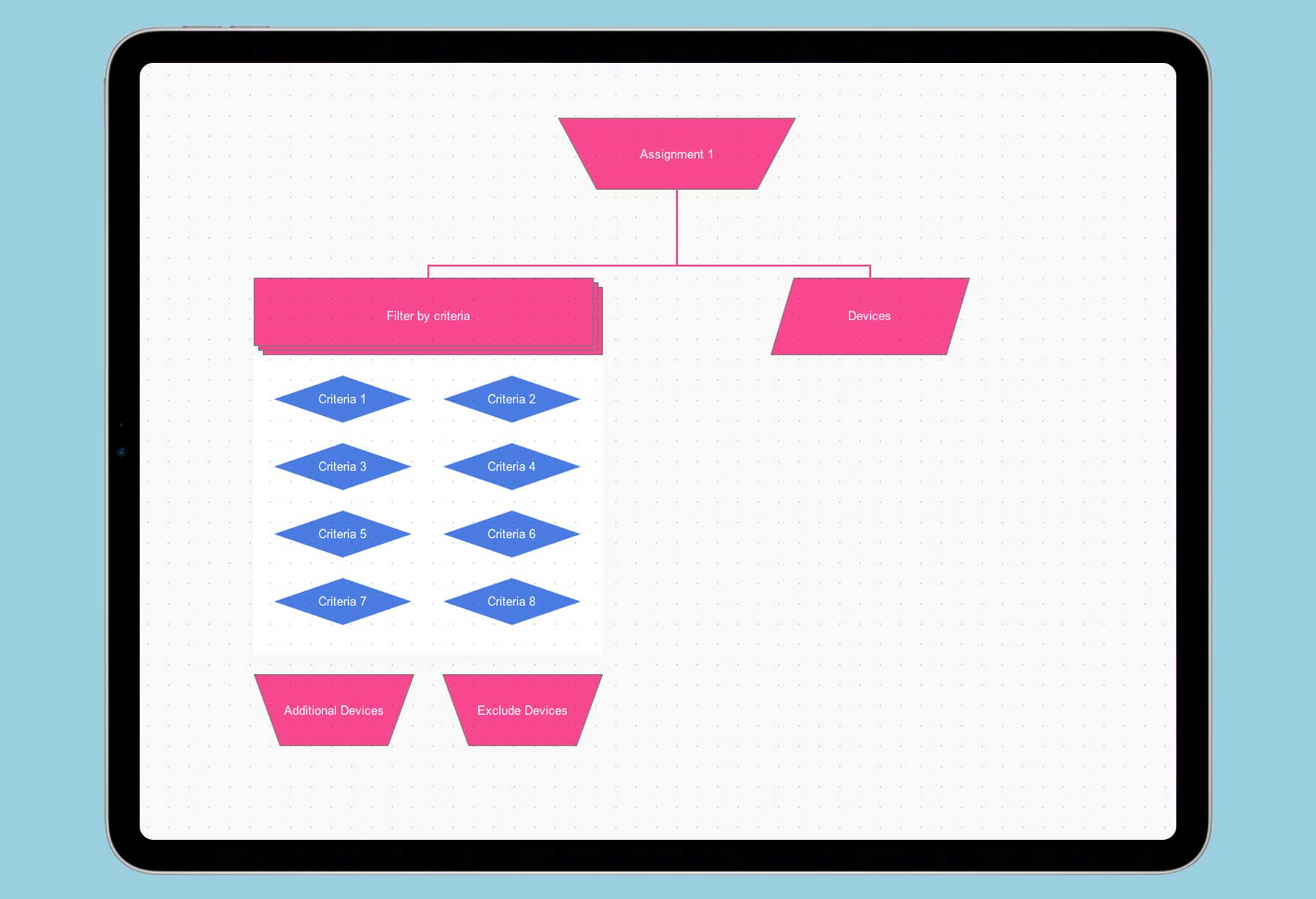
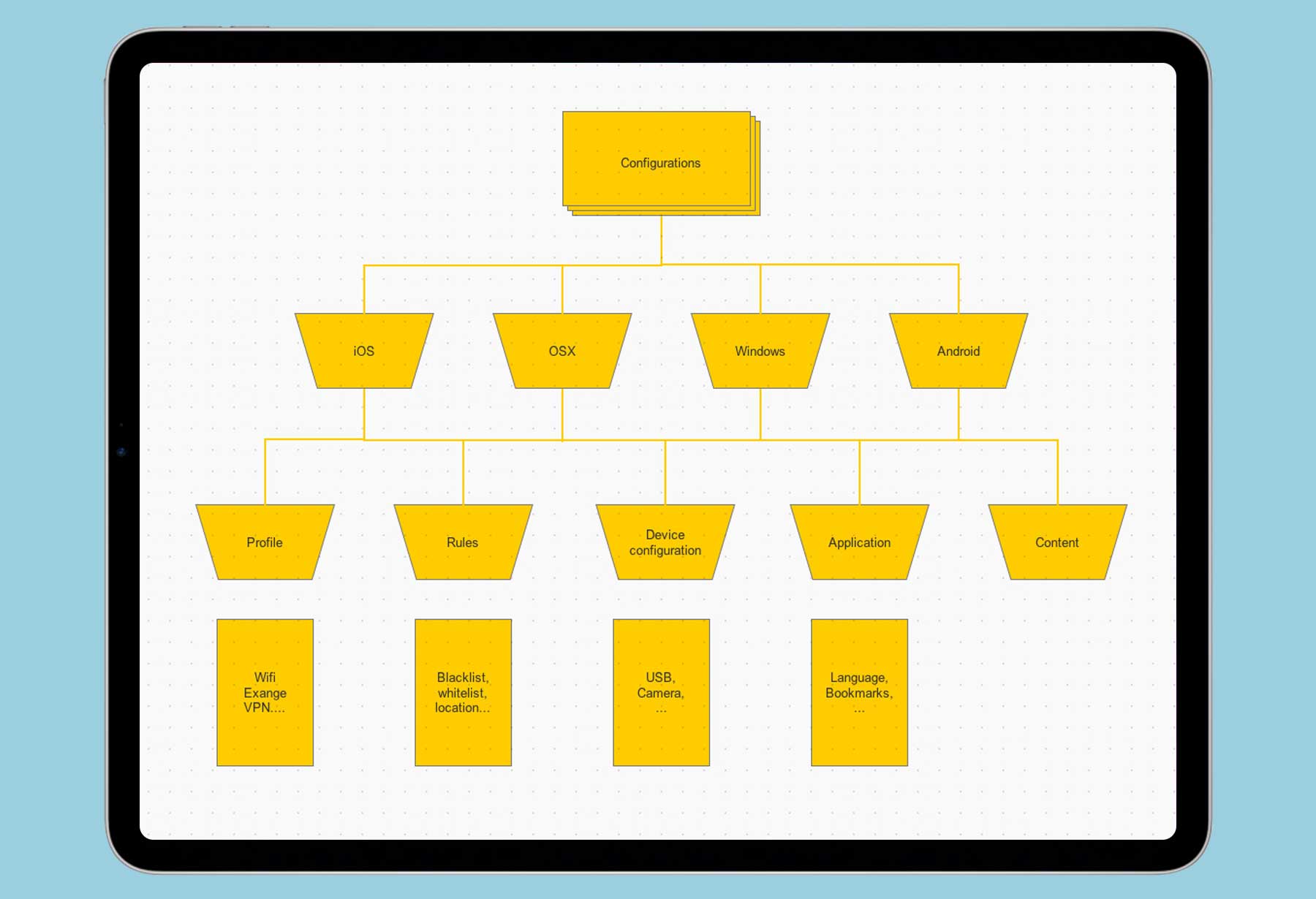
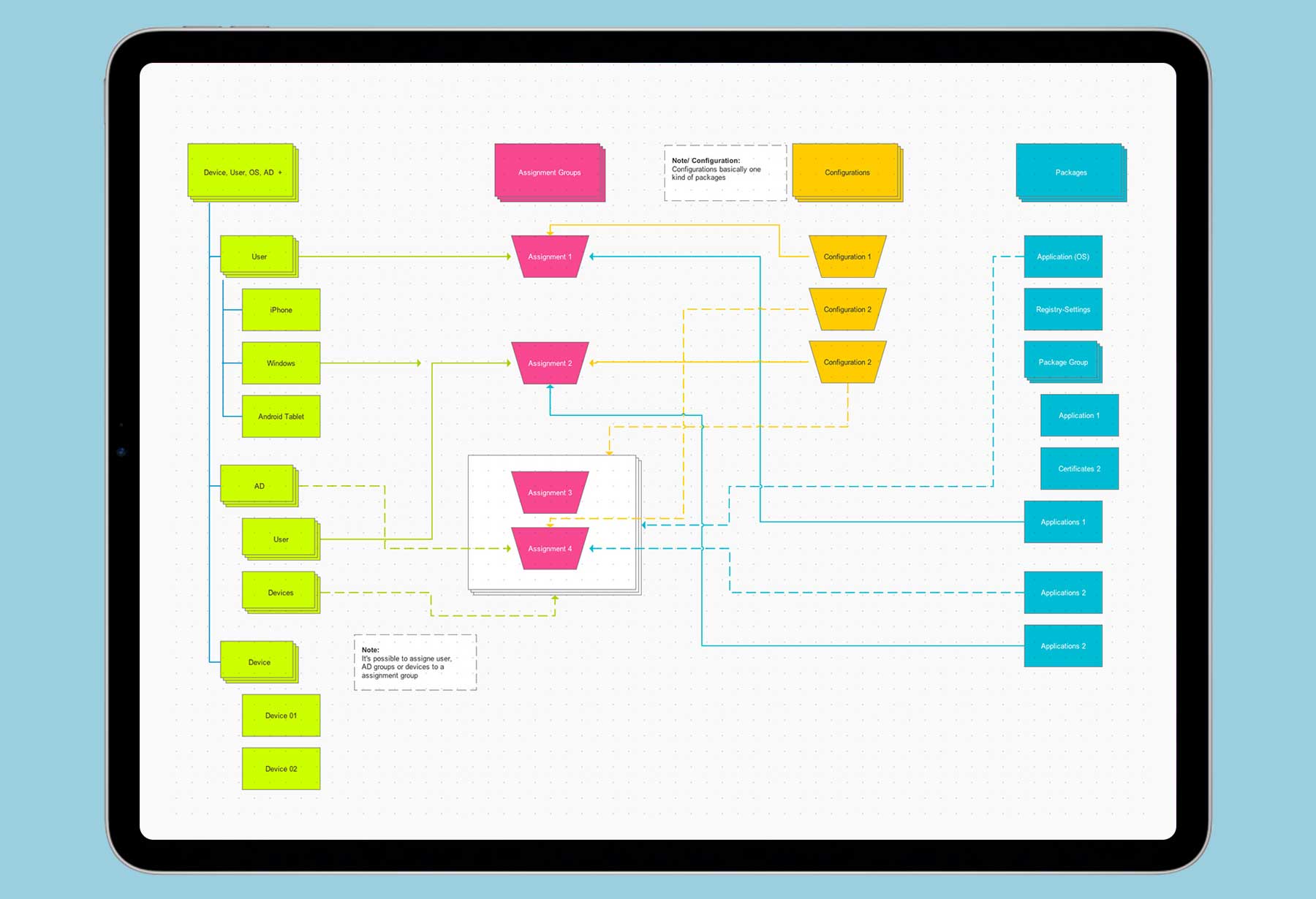
To create a sound decision-making basis for management and development, I focused on a methodical exploration of the system logic using detailed flowcharts. In close collaboration with development architects, these flowcharts were used to model complex interaction paths and make technical dependencies visible at an early stage. Through this integrative approach, requirements from three critical perspectives—technical architecture, user needs, and market competition—could be evaluated simultaneously. These flowcharts served as a central communication tool in coordination with Product Owners to precisely define the functional scope of the future system. This modular structure of the logic made it possible to better estimate the costs and benefits of individual features and to flexibly prioritize or adjust components. As a strategic liaison between business and tech, I ensured that the architectural course was not only technically solid but also consistently aligned with the long-term success of the unified enterprise platform.